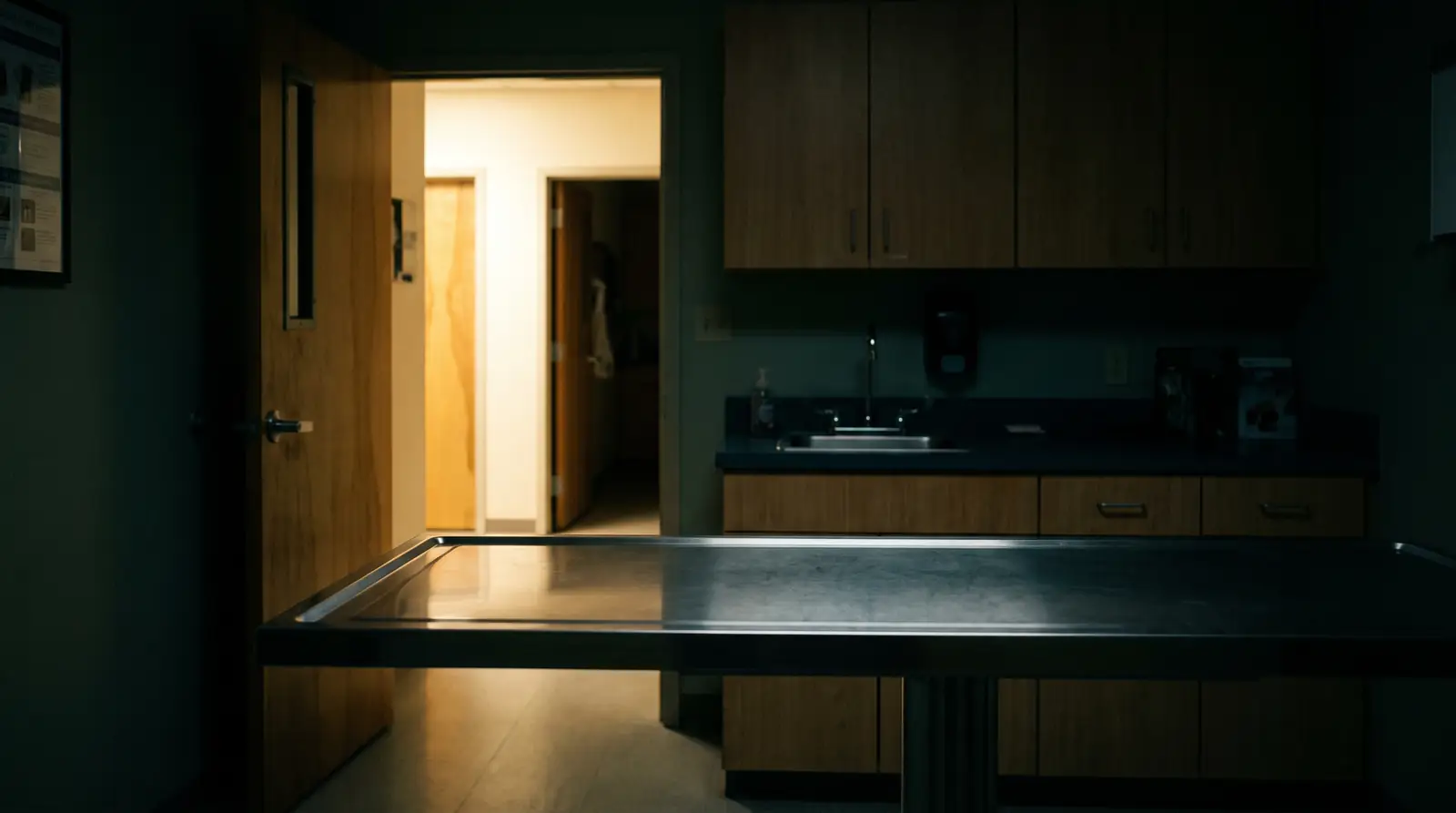
Odour is a floor problem, and floors are a time problem.
Most vet contracts are priced like an office, then under-serve the two things anyone notices: the smell in reception and the exam room floors. Both need real time on the floor, which is why we count hours instead of square footage.
- Hard floors get a genuine wet clean, not a dry pass, because that is what removes odour rather than moving it.
- Exam and treatment room floors done every scheduled night, including corners and under fixed cabinetry.
- Reception and waiting area high-touch points, where the public and animals both are.
- Kennel and ward area floors to the boundary your staff set, agreed in writing at the walkthrough.
- Background check before a key is issued, because a vet practice holds controlled drugs and you should be asking.
Agreed at the walkthrough, not in month three.
Clinical waste, drug storage, occupied kennels, and the theatre.
- We do not handle clinical or sharps waste. It stays with your licensed hauler and we clean around it.
- We do not enter drug storage. Ever, and the key policy reflects it.
- We do not clean occupied kennels or handle animals. Occupied areas are skipped and reported, not worked around.
- We are not a surgical-suite contractor. If your theatre needs a clinical standard, that is a specialist's job.
Can you deal with the smell in reception?
Usually. It is almost always the floor, not the air, and the fix is time rather than fragrance. If it turns out to be structural, a drain or old grouting, we will tell you instead of selling you a contract that cannot fix it.
What about kennels and wards?
To the boundary your staff set, agreed in writing at the walkthrough. Occupied areas are skipped and reported.
Are your people background-checked?
Yes, before a key is issued. You hold controlled drugs. You should be asking every contractor that, and expecting to see the policy.
What happens if a night gets missed?
That week comes off your next invoice automatically, with the credit already applied on the invoice.